浮世絵の旅 — 日本の心
A Journey Through Old Japan
富士山
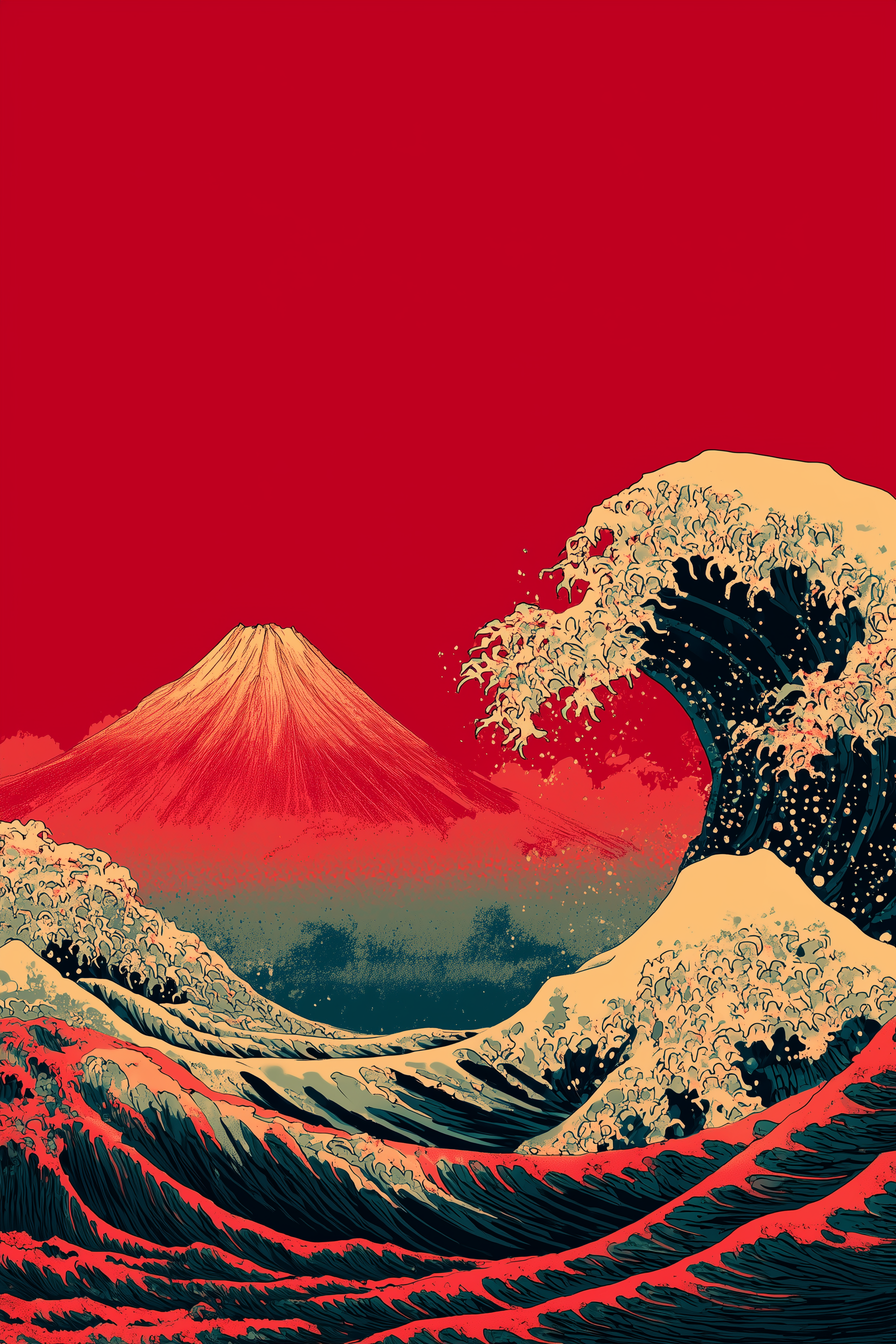
Where the crimson sky meets the great wave — a scroll through the floating world, one woodblock print at a time.
富士
Scroll
Where the crimson sky meets the great wave — a scroll through the floating world, one woodblock print at a time.
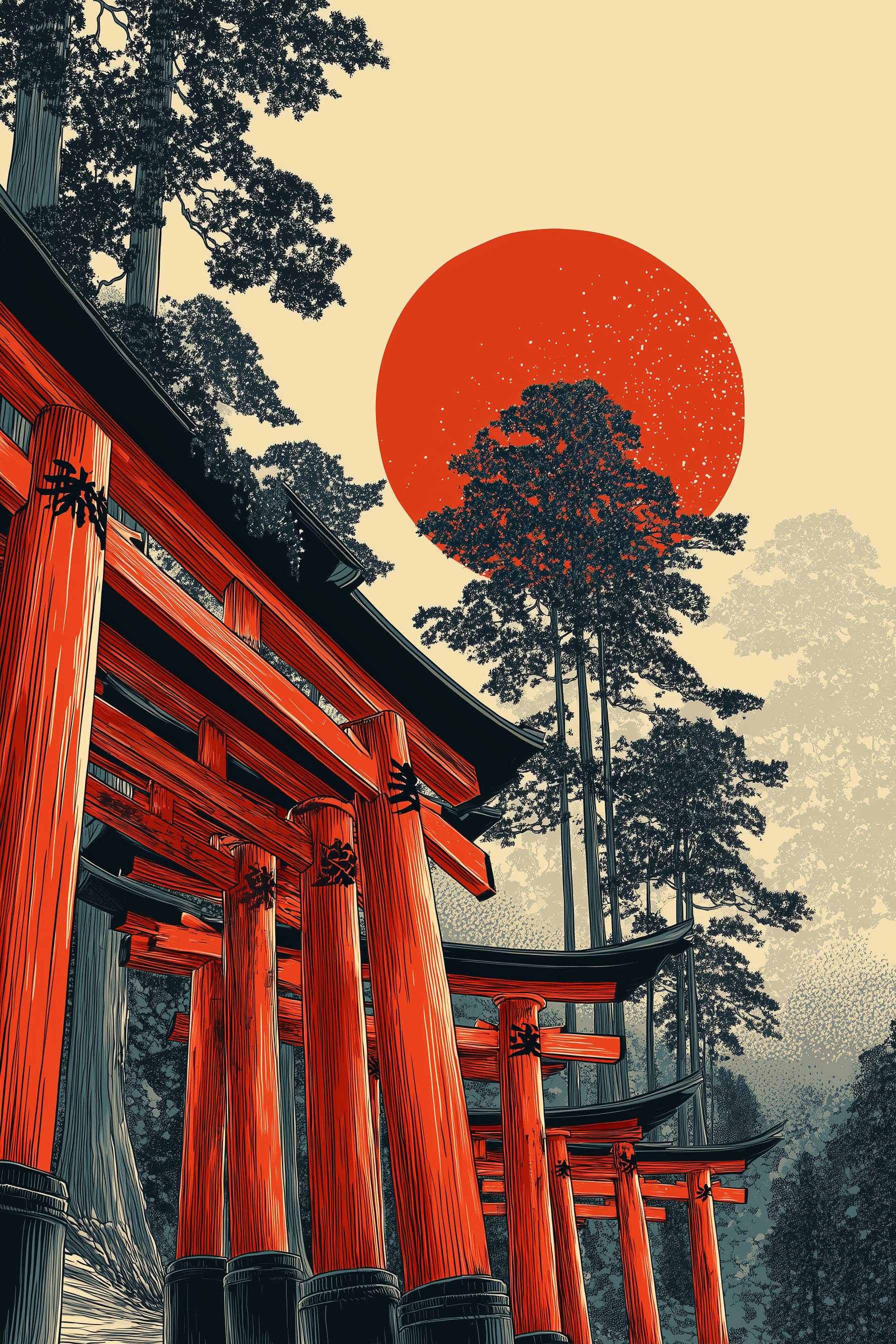
Senbon Torii — Fushimi Inari-taisha, Kyoto
Beneath the cedar slopes of Mount Inari, thousands of vermillion gates lean into one another until they become a tunnel of light. Each torii marks the threshold between the ordinary world and the sacred — pass through one, and you have already left something behind.
The gates are donated: every pillar carries the black-inked name of the merchant or family who offered it, a prayer for prosperity written in lacquer and cedar. The practice dates to the Edo period, and the mountain has been accepting gates faster than weather can retire them ever since. Walk the full circuit and the light strobes red-shadow-red for four kilometres.
Inari is the kami of rice, sake, and commerce, attended by stone foxes — kitsune — who carry keys to the granary in their mouths. The vermillion itself is no accident: the pigment, once mixed with mercury, was believed to repel decay and evil alike. In this print, the artist tilts the camera skyward so the gates crowd the frame like masts, and hangs a snow-flecked red sun behind the cedars.
The gate does not ask where you are going.
It only marks that you have chosen to go. — Pilgrim proverb, Mount Inari
Chikurin — Arashiyama, western Kyoto
Step off the road at Arashiyama and the temperature drops. Mōsō bamboo climbs twenty metres before it leafs, so the grove becomes a hall of green columns with the canopy for a ceiling — daylight arrives already filtered, the colour of shallow water.
Keep scrolling — the scroll unrolls sideways from here, the way an emakimono handscroll is read.
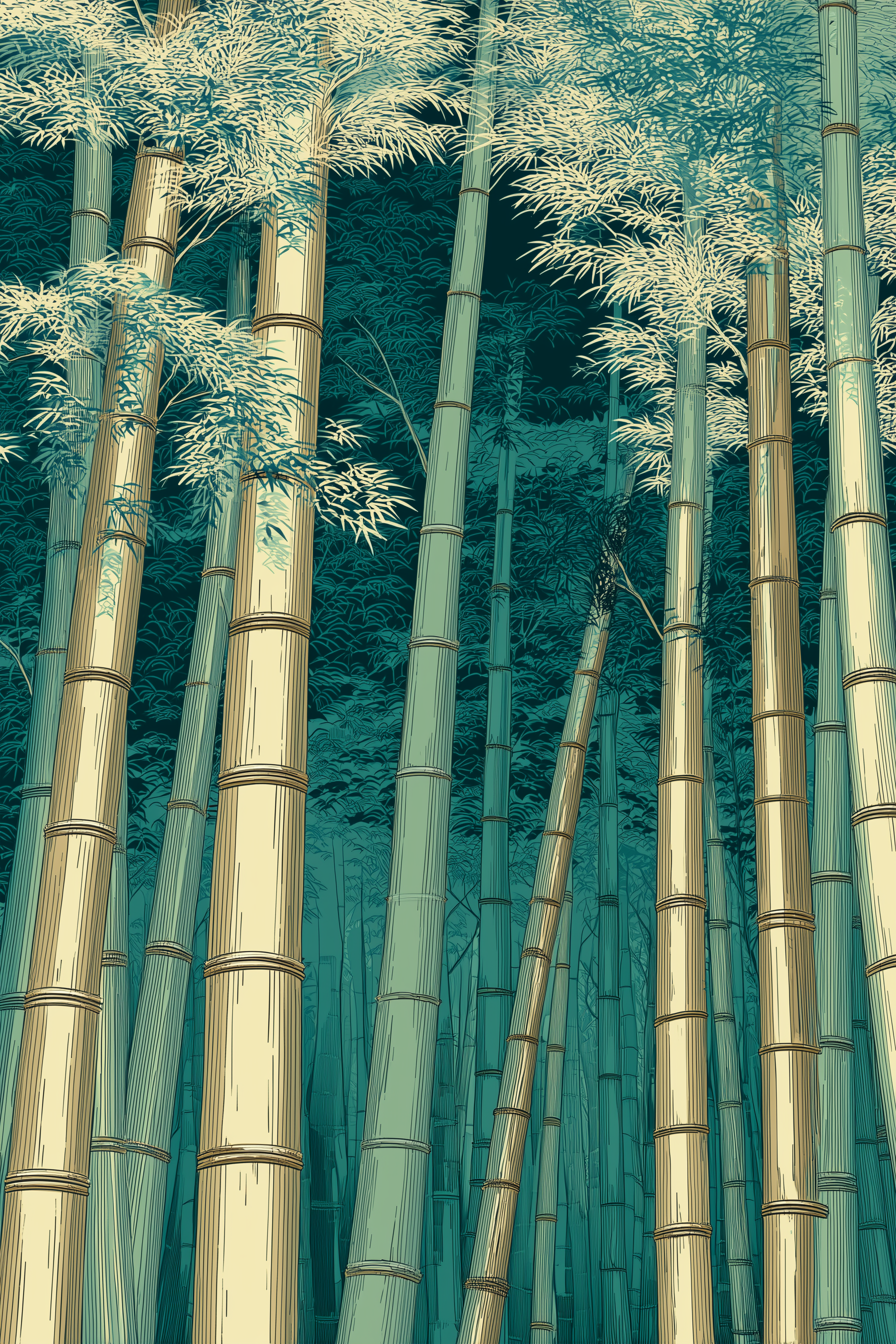 Plate III · The Thicket
Bamboo is a grass, not a tree — and it behaves like one. A mōsō shoot can rise a full metre in a day; you can sit beside it and watch it grow. Yet the same stalk bends to the ground under snow and stands back up, which is why bamboo, with pine and plum, is one of the Three Friends of Winter.
Sound is the grove's other art. The Ministry of the Environment lists the knock and creak of Arashiyama's swaying culms among the 100 Soundscapes of Japan.
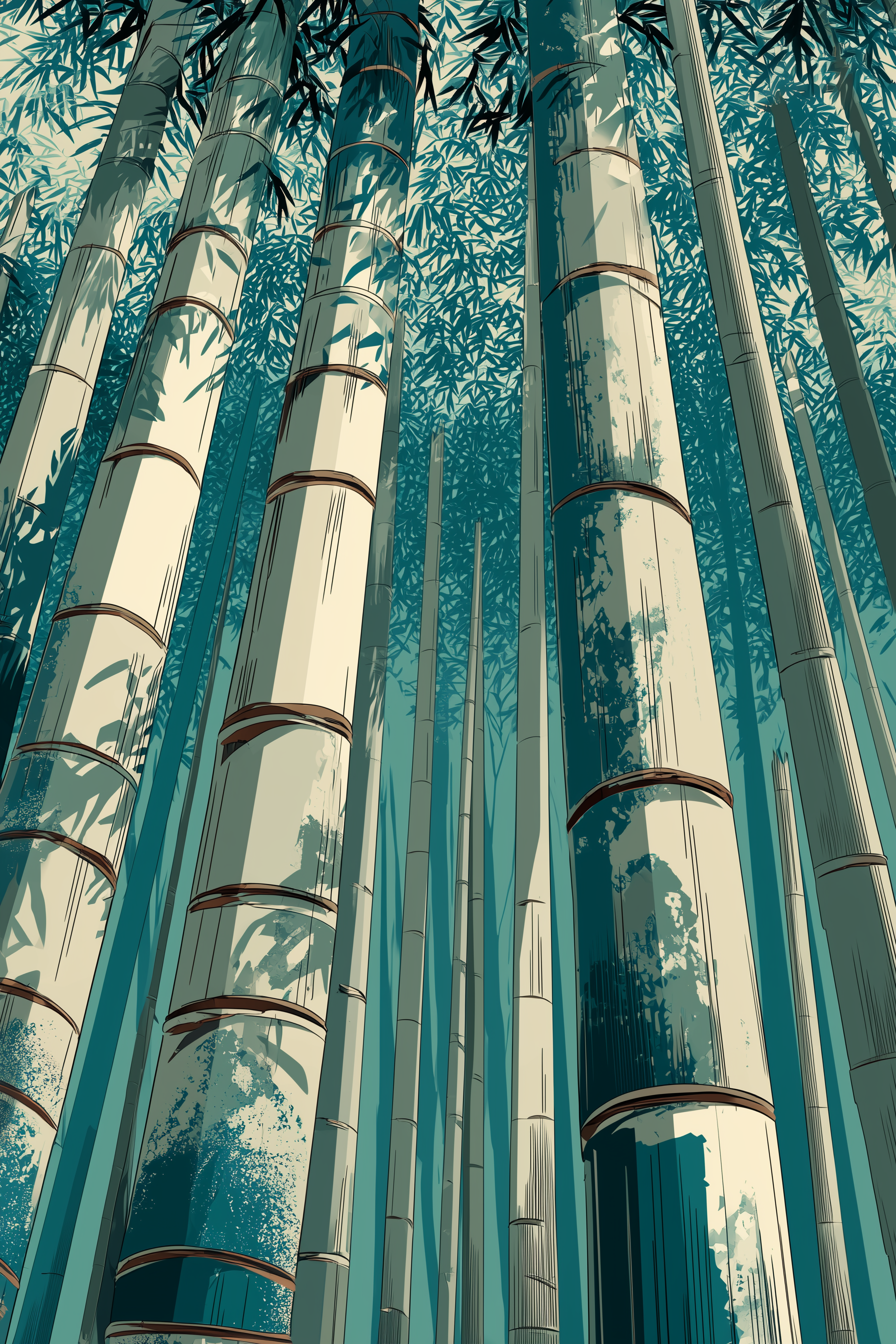 Plate IV · Looking Up
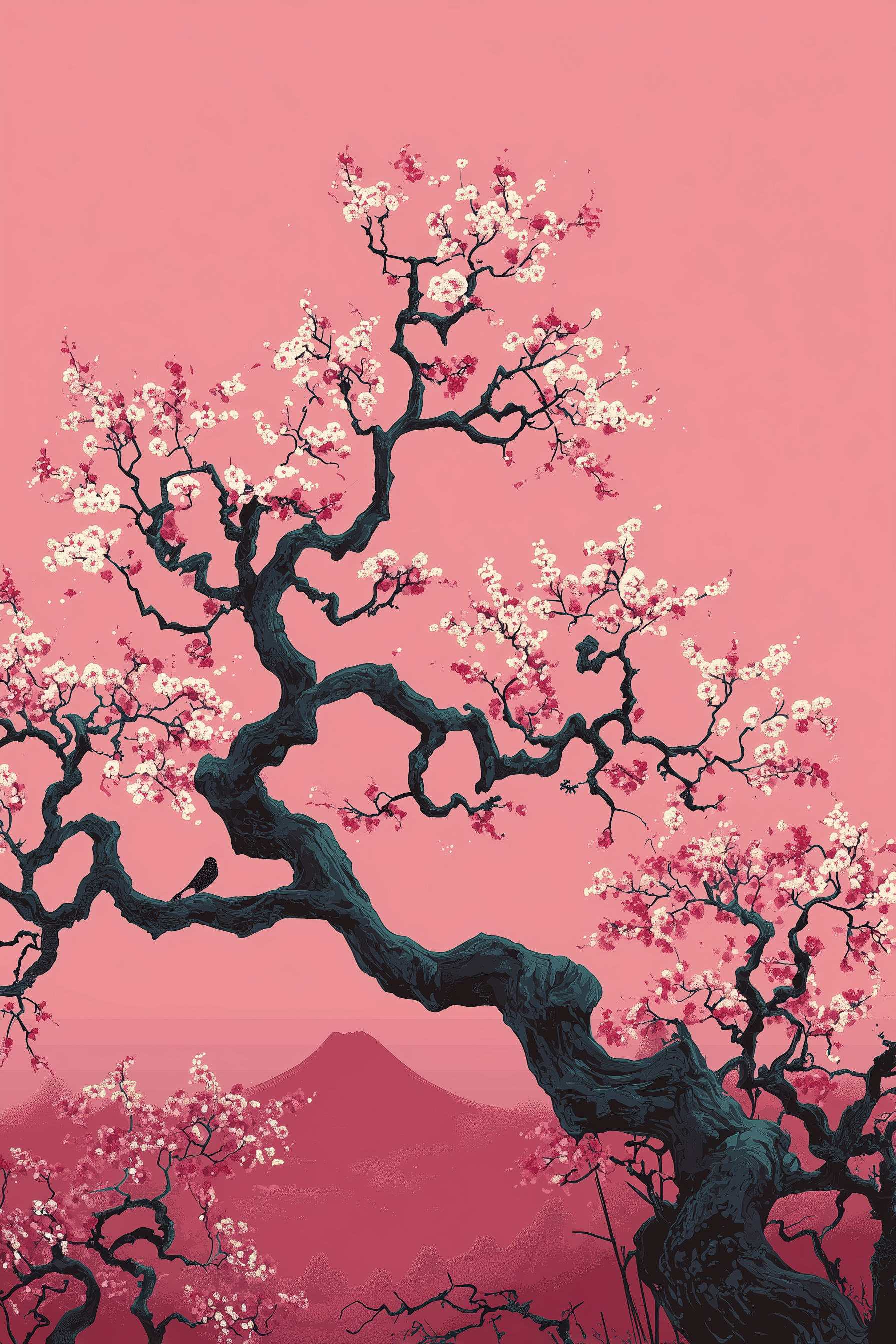
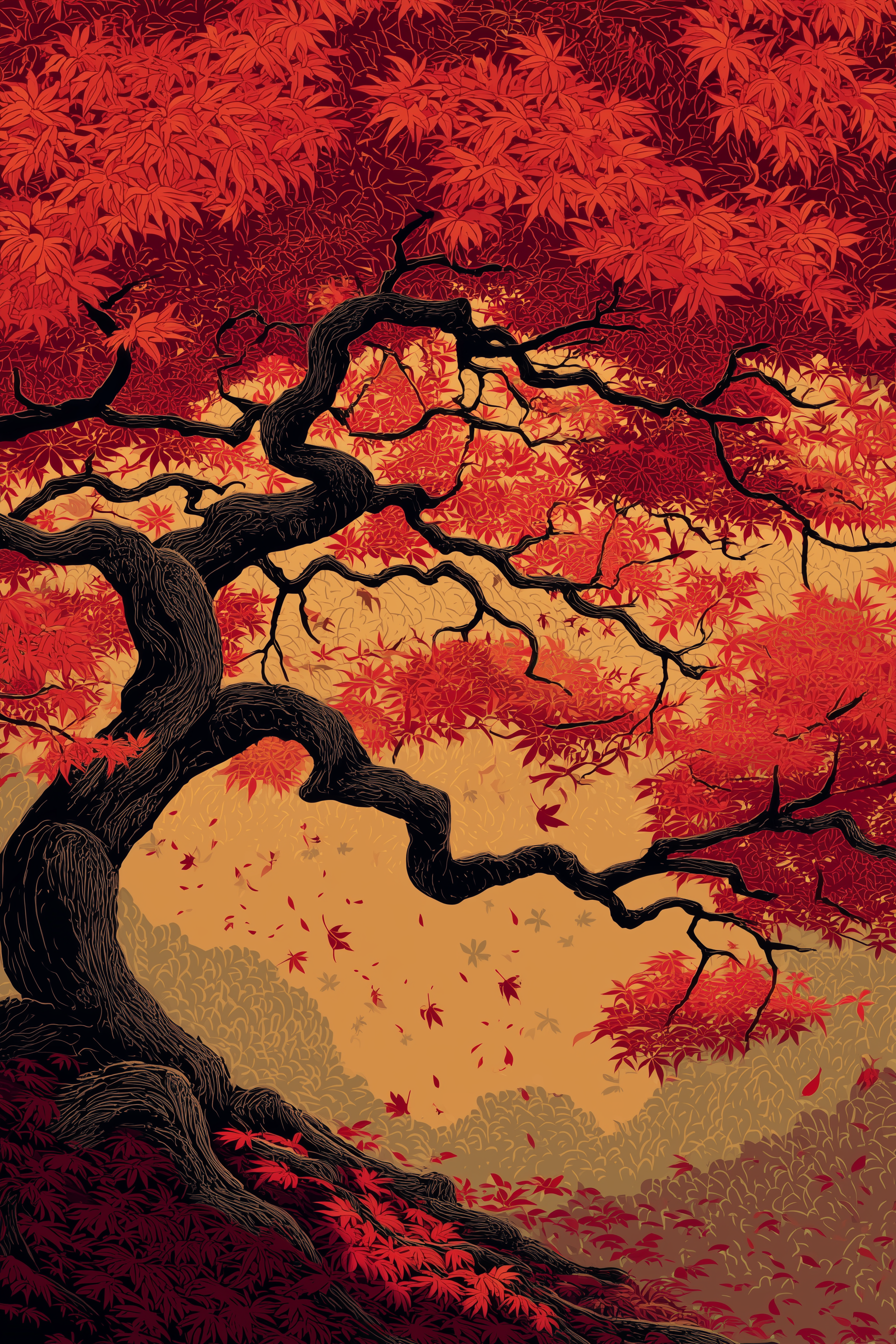
The sakura front is tracked on the evening news like weather, moving north at walking pace from Kyūshū to Hokkaidō. Full bloom lasts scarcely a week — which is the point. The blossoms teach mono no aware, the gentle ache of things that pass. Note the bird pausing on the bough: even it seems to know to sit still.
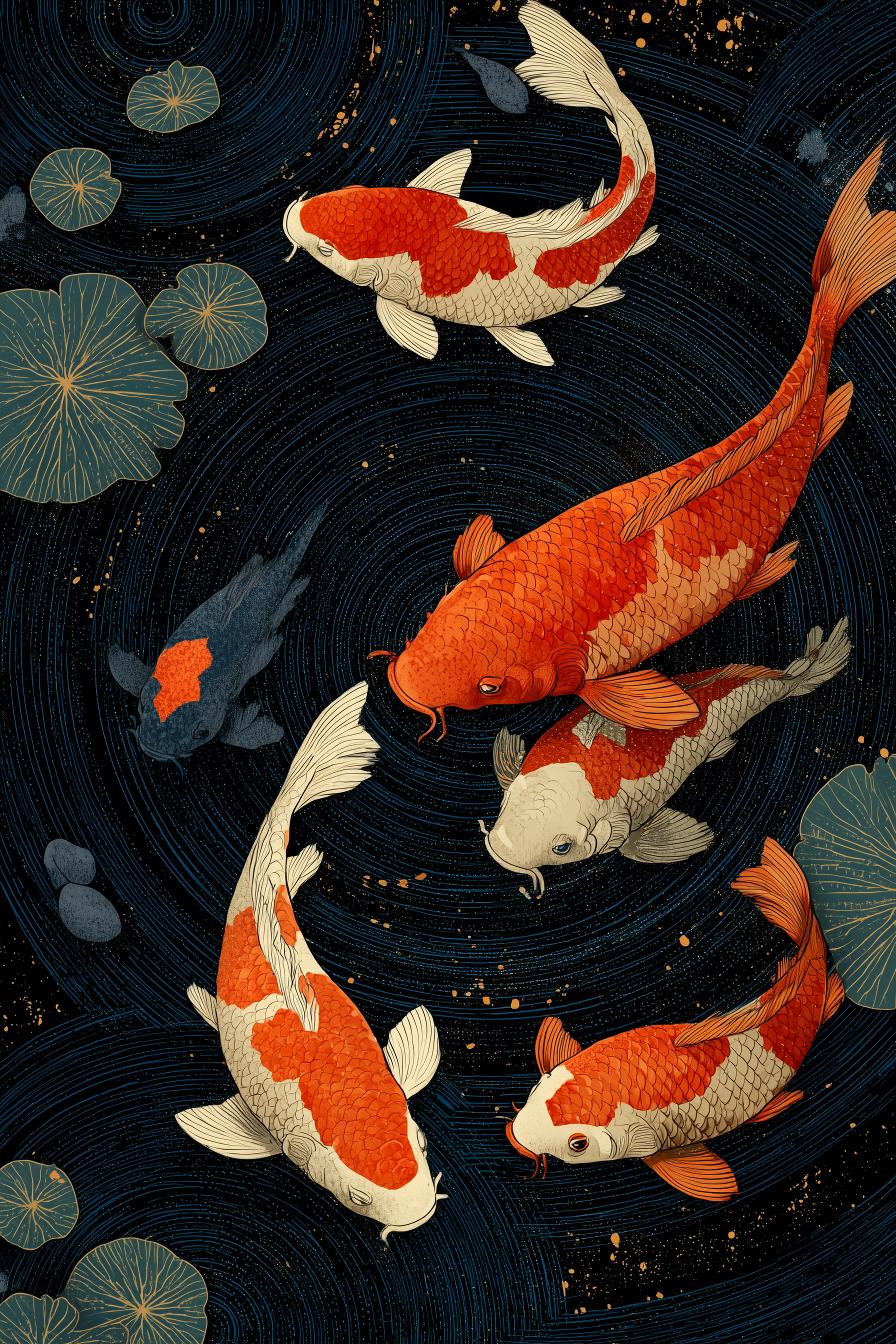
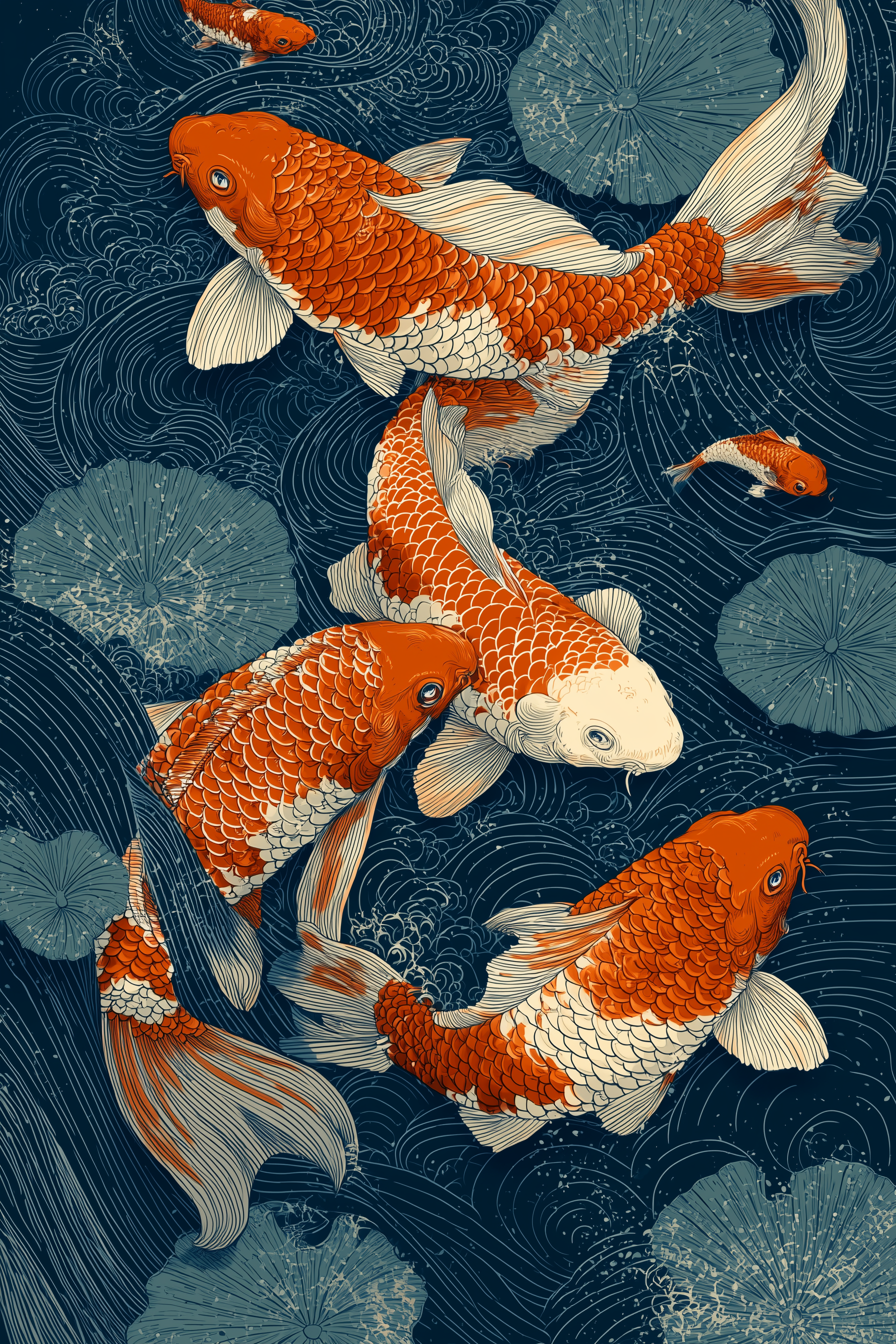
Chinese legend says a carp that fights its way up the falls at Dragon Gate becomes a dragon — which is why the koi stands for perseverance, and why paper carp streamers fly for Children's Day each May. The fish earns its myth: koi routinely live half a century, and one scarlet koi named Hanako was ring-dated to 226 years.
The ornamental breeds — nishikigoi, "brocaded carp" — began as a rice farmer's sideline in the snow valleys of Niigata around 1820. A mutation of colour in a food carp, kept instead of eaten, became a living jewel trade where single fish now change hands for the price of a house.
In both prints the artist follows ukiyo-e convention: the pond is seen flat from above, the water told entirely through engraved line — concentric rings in the dark pond, combed swirls in the pale one — so the fish seem to float on pattern rather than depth.
Chōchin — paper, bamboo, and a single flame
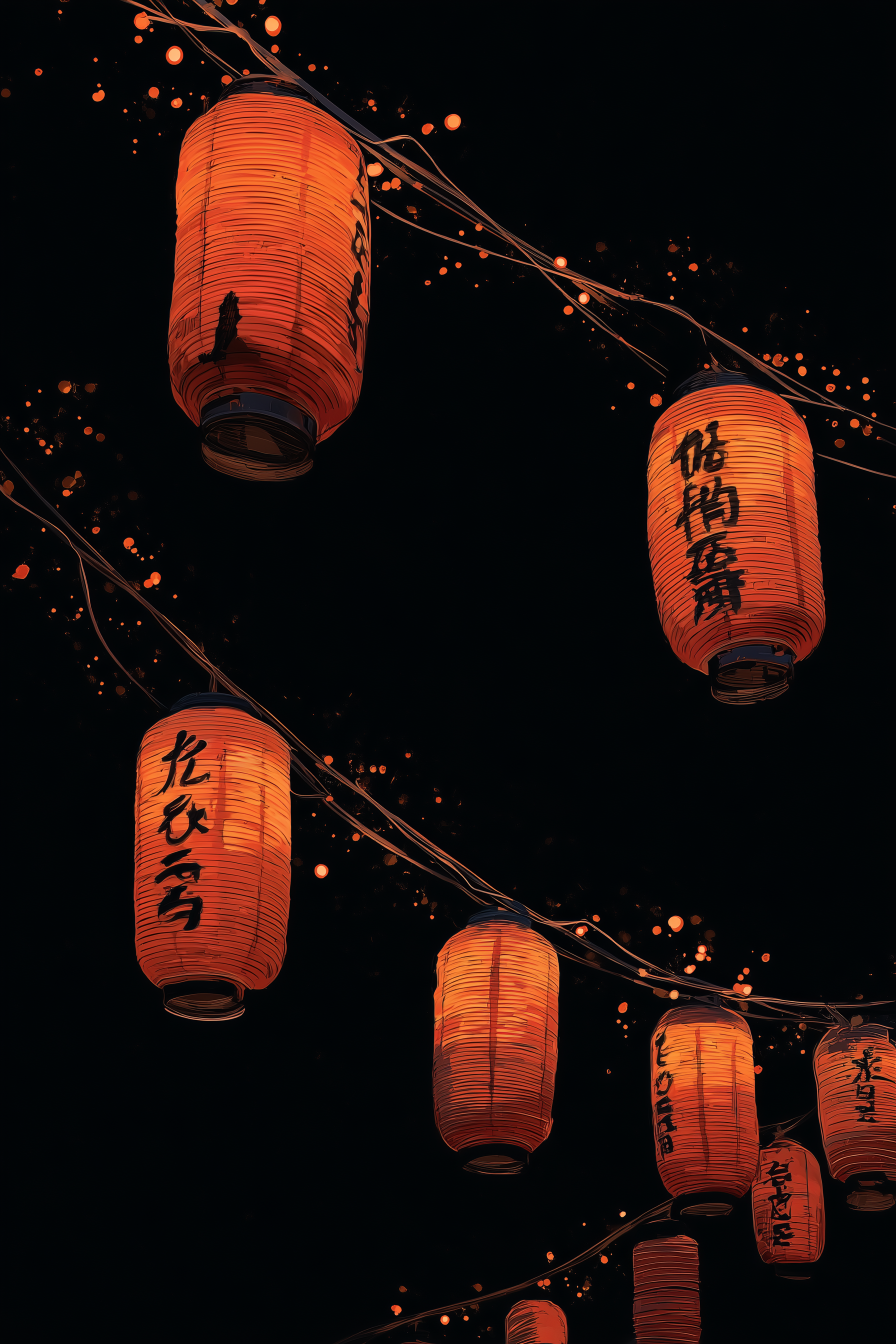
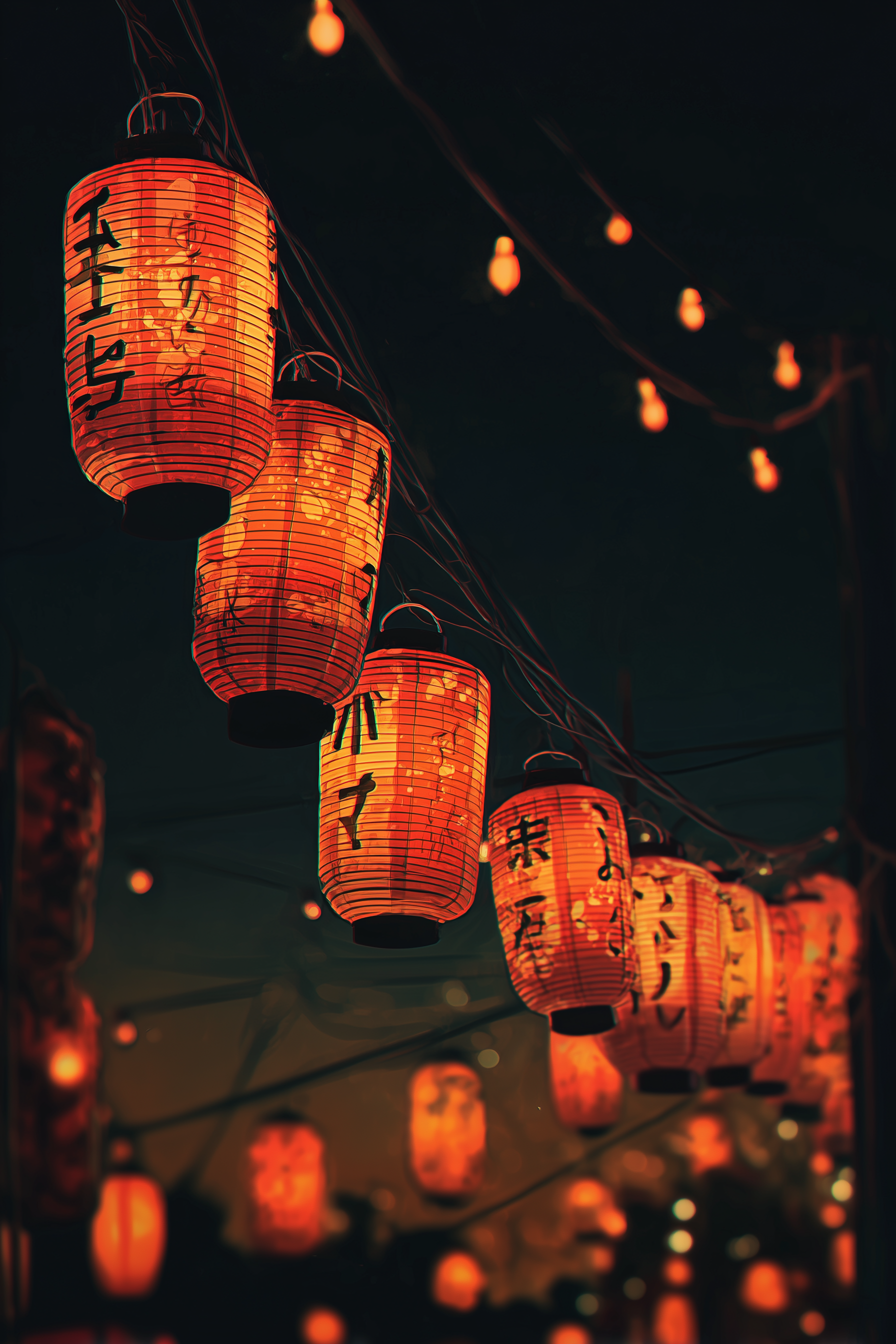
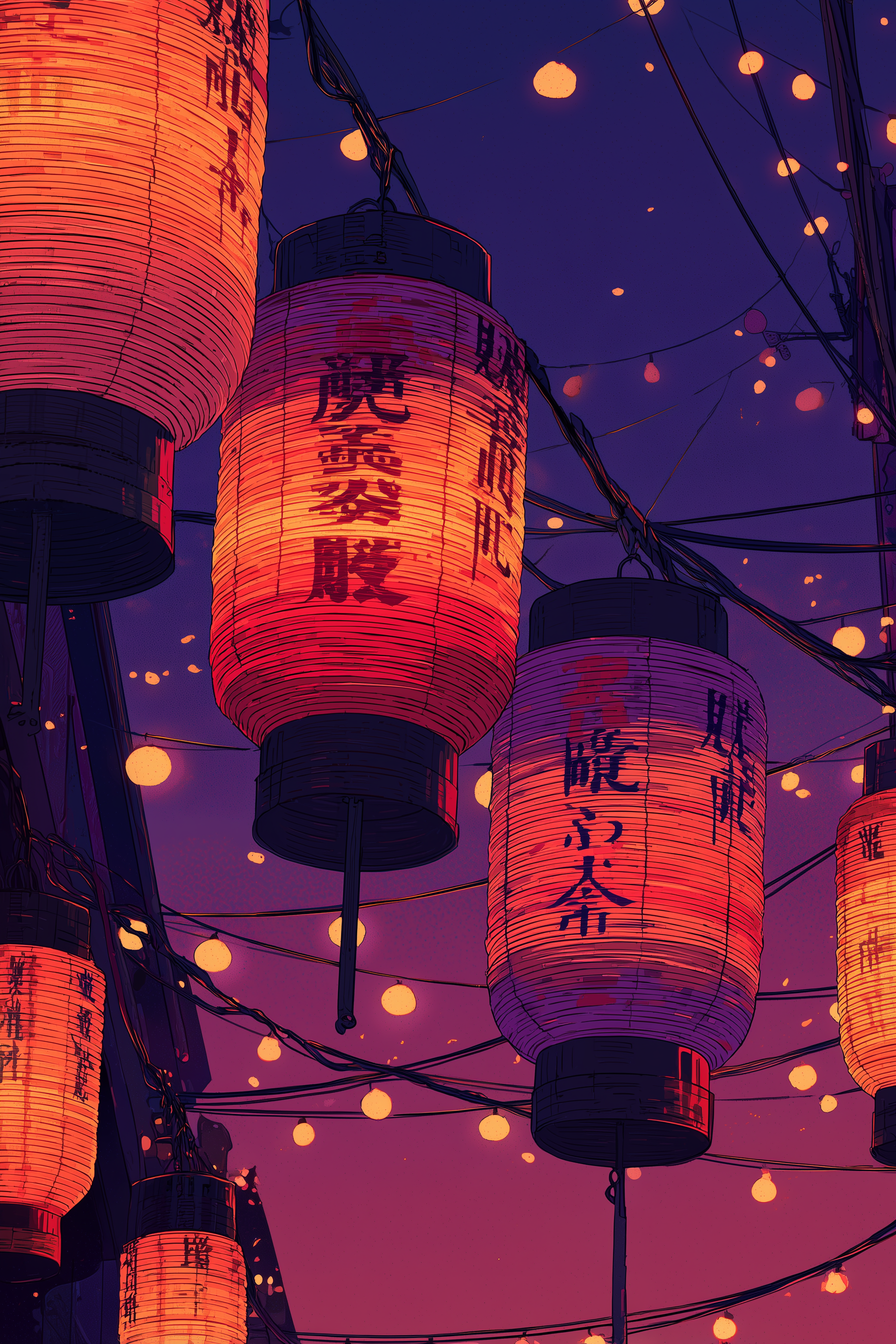
A chōchin is almost nothing: a spiral of split bamboo, a skin of washi paper, a flame. Collapsed, it folds flat as a fan; lit, it becomes architecture. The kanji brushed on its side name a shrine, a shop, a family — so a street of lanterns reads like a directory of the neighbourhood, written in light.
Summer is their season. During Obon, lanterns are lit to guide ancestors home and, on the last night, set adrift on rivers to see them off again — tōrō nagashi, a current of small fires. And outside any izakaya, one red lantern — the akachōchin — still means what it has meant for three hundred years: the kitchen is open, come in out of the dark.
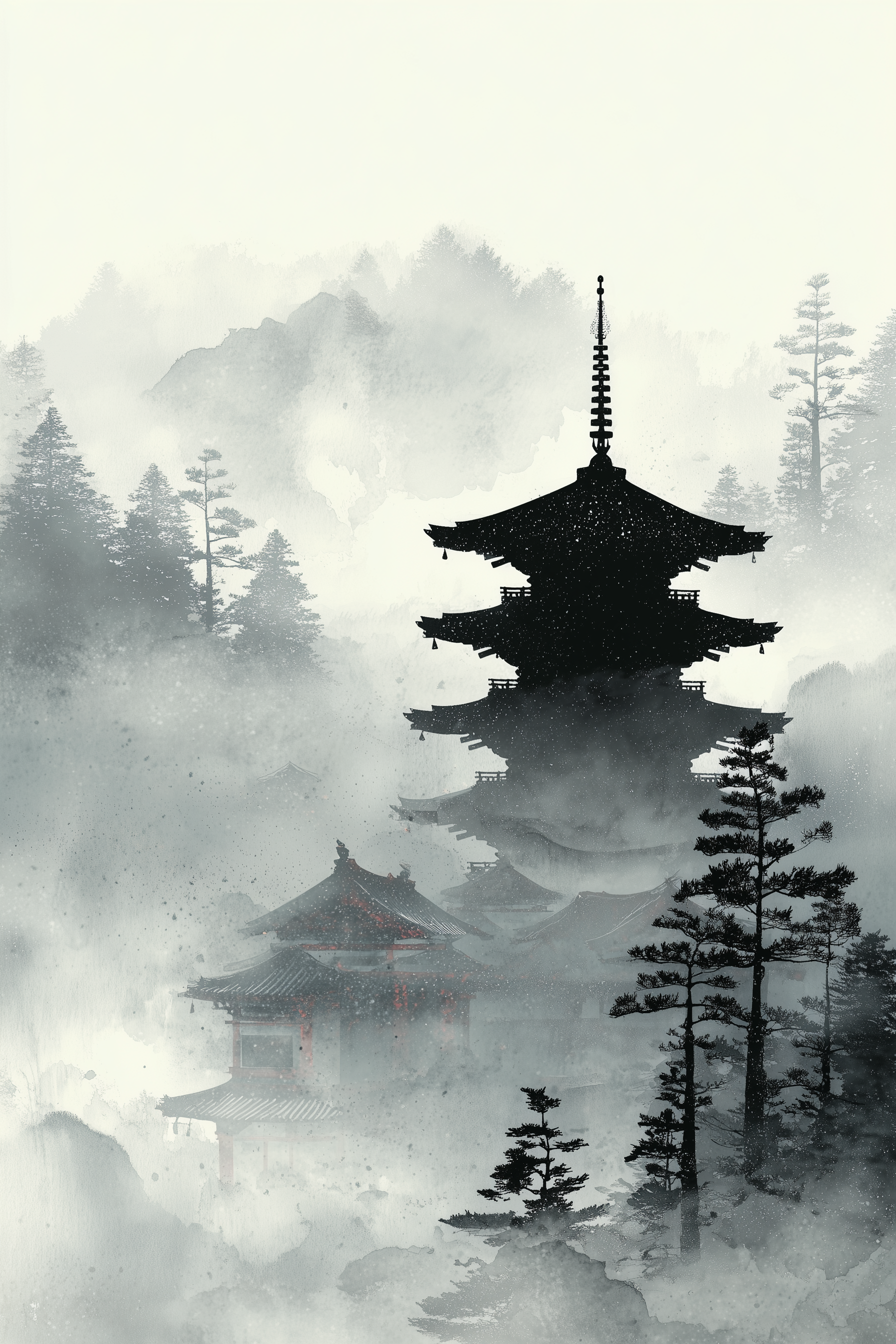
Each roof is one of the five elements — earth, water, fire, wind, void — stacked toward the sky, with the ringed spire counting nine heavens above them. The oldest, at Hōryū-ji, has stood since around 700: among the oldest wooden buildings on Earth.
Their secret is looseness. The storeys are not fixed to each other but hang around a free-floating central pillar — the shinbashira — so in an earthquake each floor sways against its neighbours and the tower shrugs the shock away. Fourteen centuries of tremors; almost no pagoda has ever fallen to one.
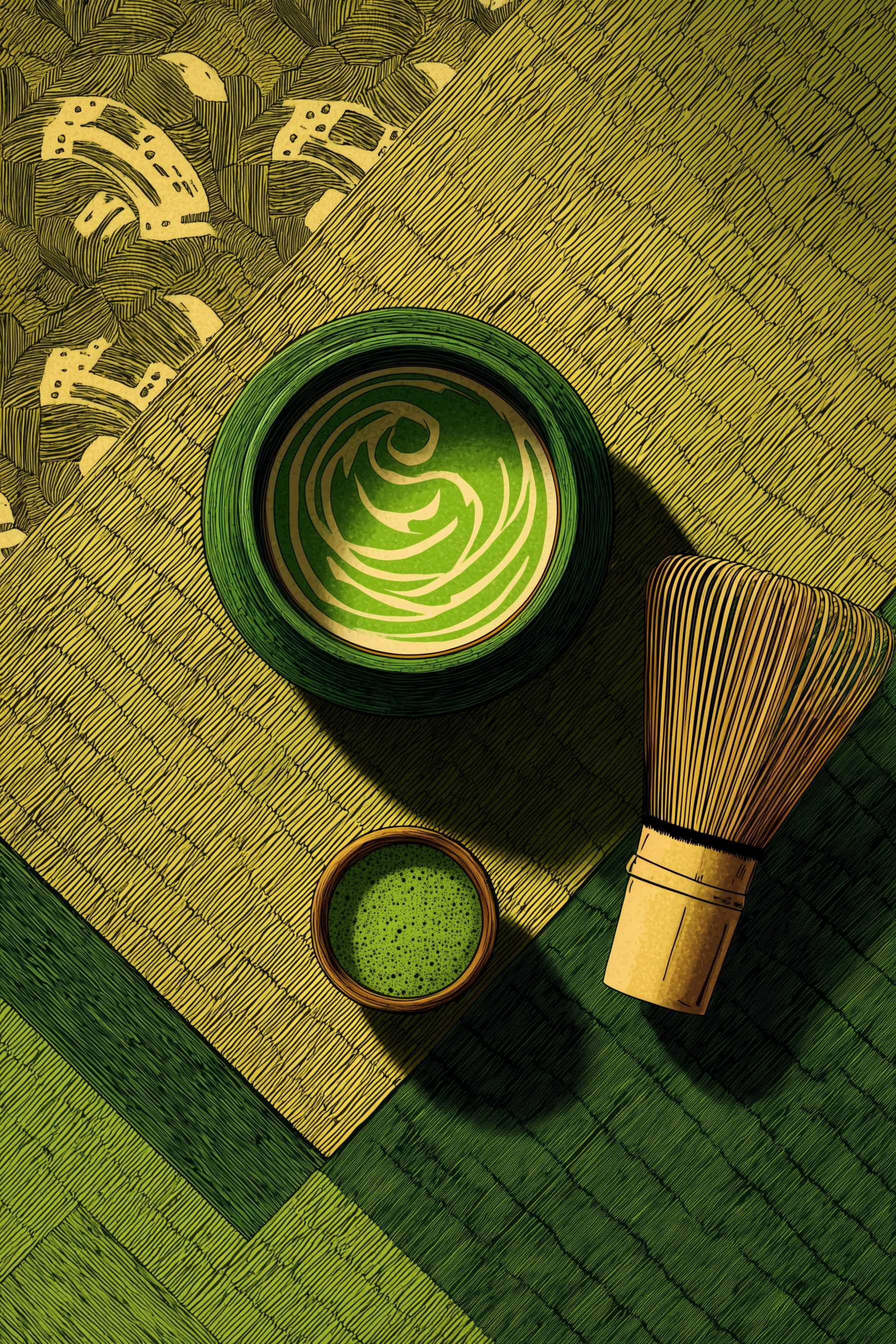 Plate XI · The Bowl
The tea ceremony is four hundred years of choreography in service of one idea: ichi-go ichi-e — this gathering, these guests, this bowl, will never occur again, so attend to it completely. Sen no Rikyū pared the practice to a two-mat hut and asked, in effect, how little a moment needs in order to be enough.
Every object in the print is prescribed: the chawan turned twice before drinking, the chasen whisk carved from a single node of bamboo into a hundred springy tines, the matcha itself — shade-grown leaf, stone-milled to powder — whisked not stirred, until the foam draws its own spiral like a raked garden.
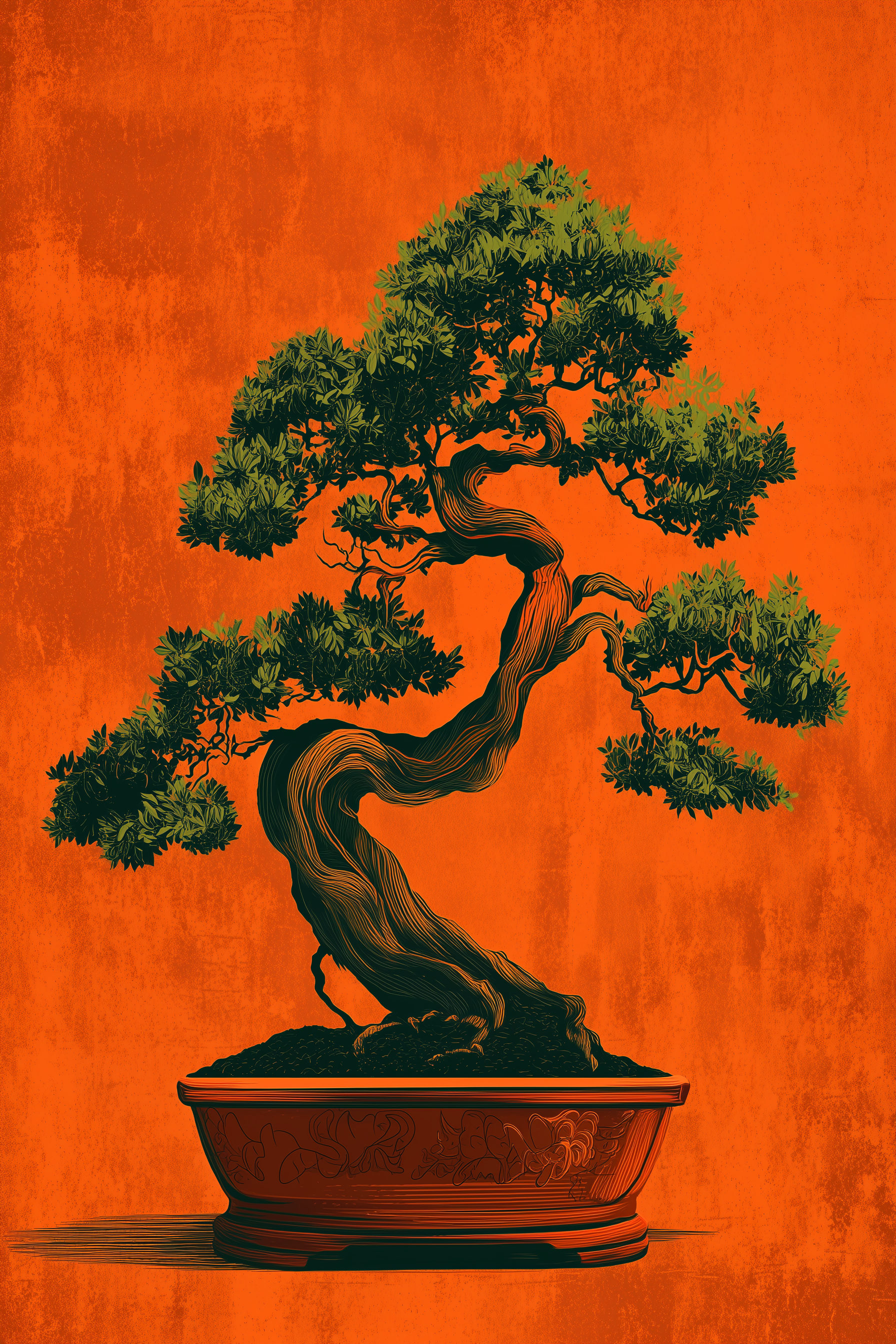 Plate XII · The Tree
A bonsai is not a dwarf species — it is an ordinary tree persuaded, wire by wire and season by season, to live at the scale of a windowsill. The oldest specimens in Japan have been in continuous training for over a thousand years, passed between generations of keepers who will each see only a fraction of the work.
The ideal is wabi-sabi: asymmetry, age, imperfection worn openly. A masterpiece leans as this one does — the S-curve trunk called moyogi — and must look not made but weathered, as if the tray had simply held a mountainside for centuries.
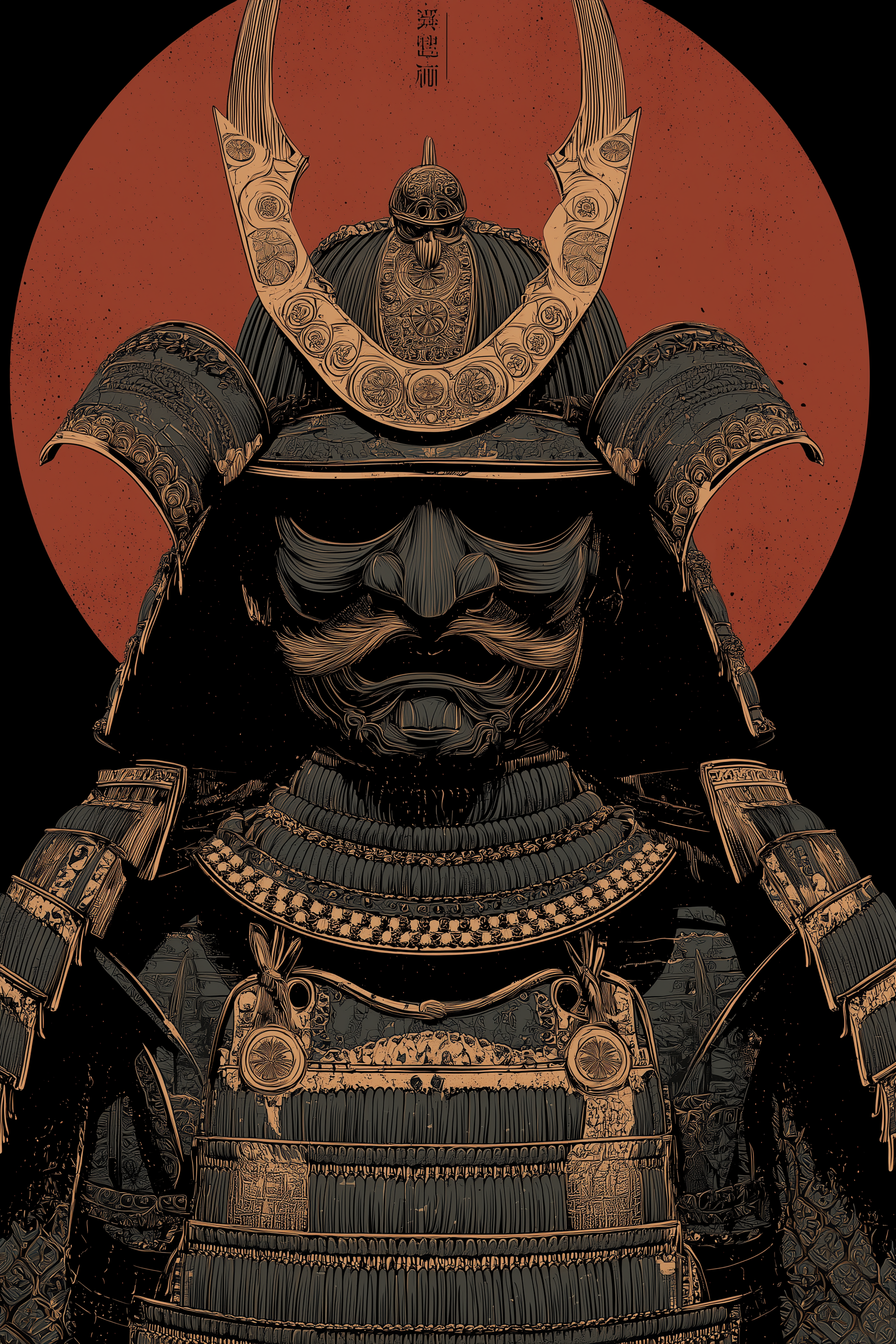
Bushidō — the way of the warrior. The mask scowls so the man beneath it never has to.